
Every dive you log becomes a reef record.
A free dive log for iPhone, Android and the web. The species you see and the state of the coral reach the open databases that marine parks and researchers use, if you choose to share them.
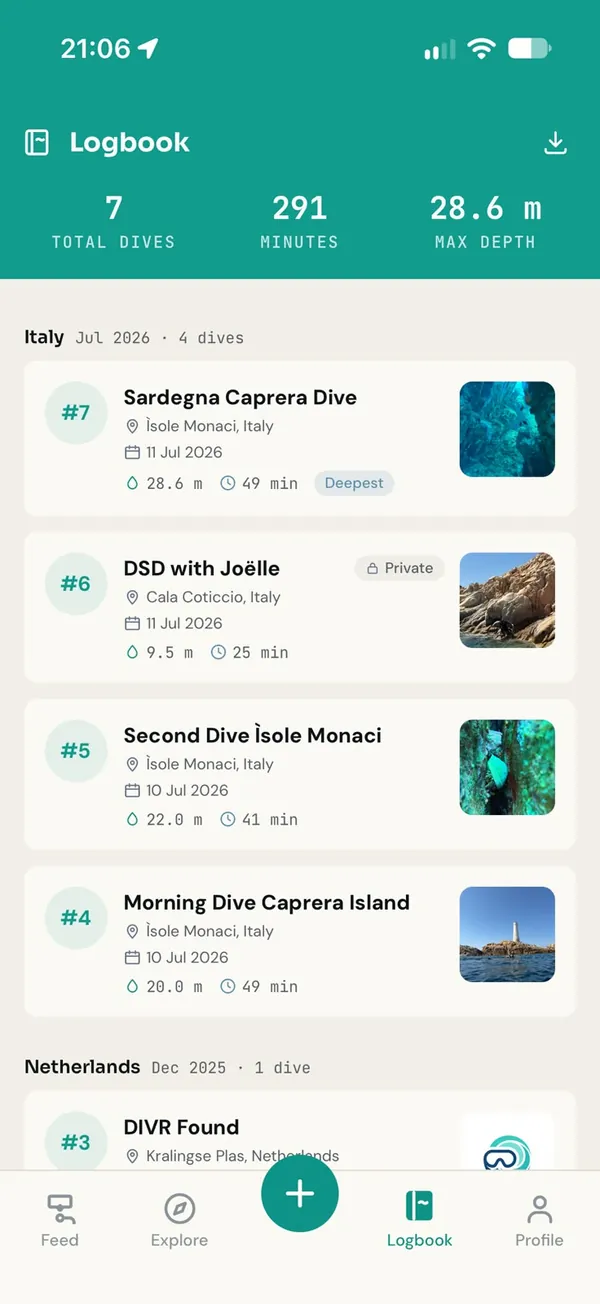
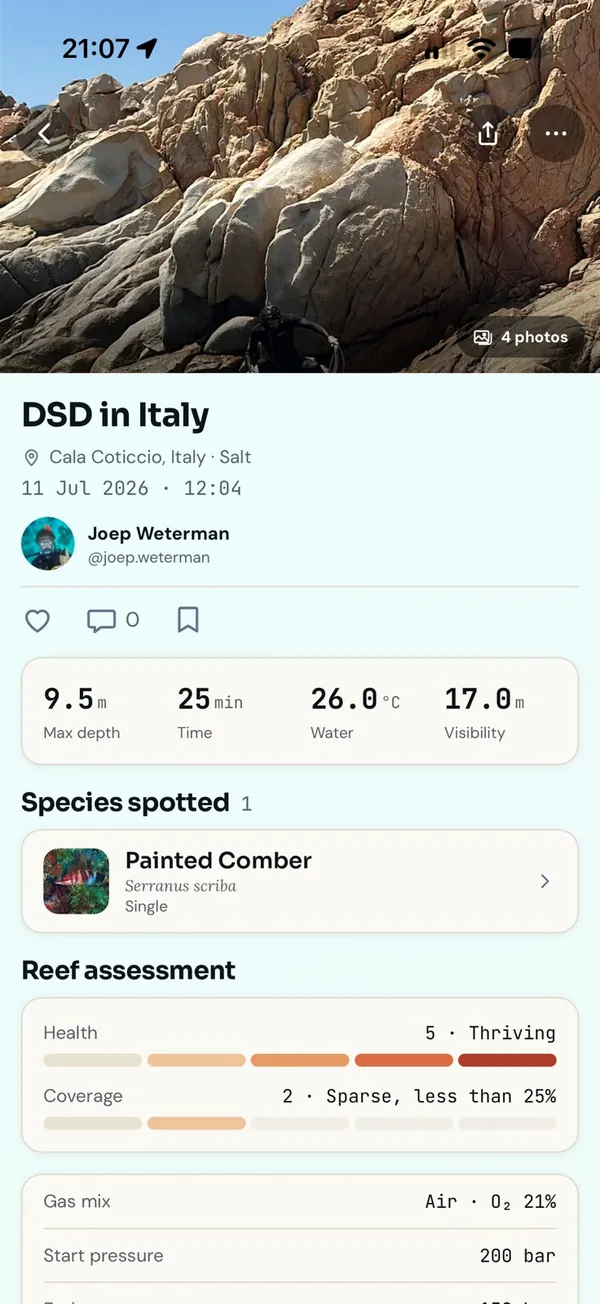
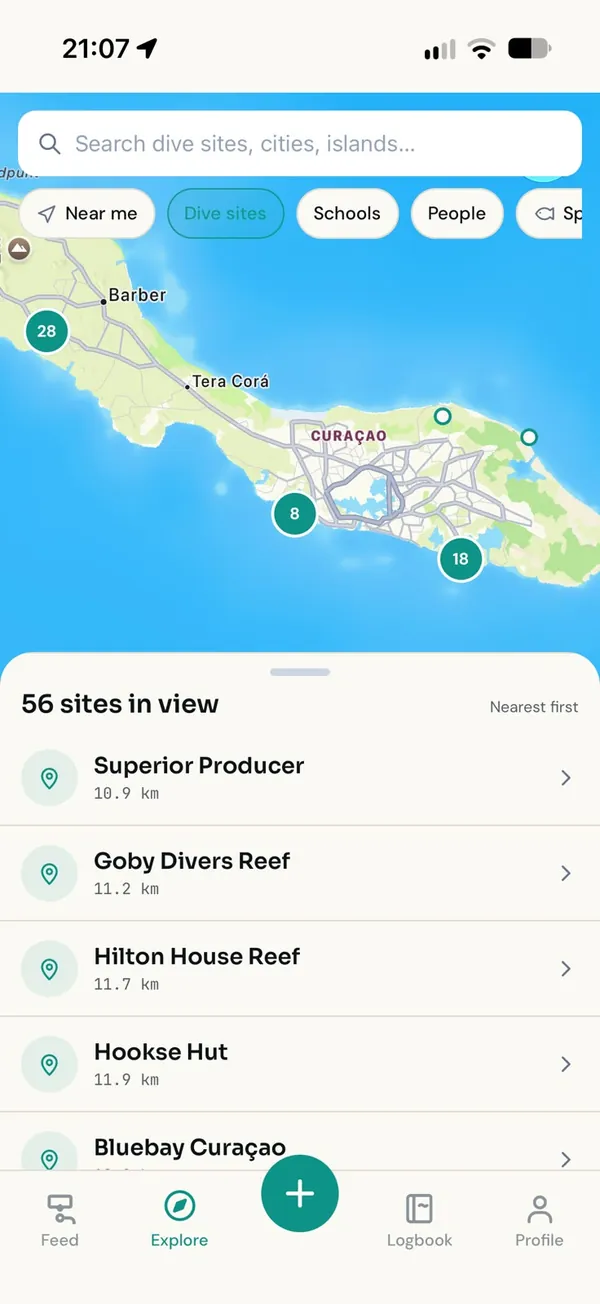
Built on records, not likes.
Every species is checked against the World Register of Marine Species before it's stored.
- 0
- dive sites in 146 countries
- 0
- species a diver can log
- 0
- families, all WoRMS-checked
- 0
- marine parks piloting it
What happens to your dive
1
Log it in under a minute
Site, depth, time and photos. Offline on the boat is fine; it syncs later.
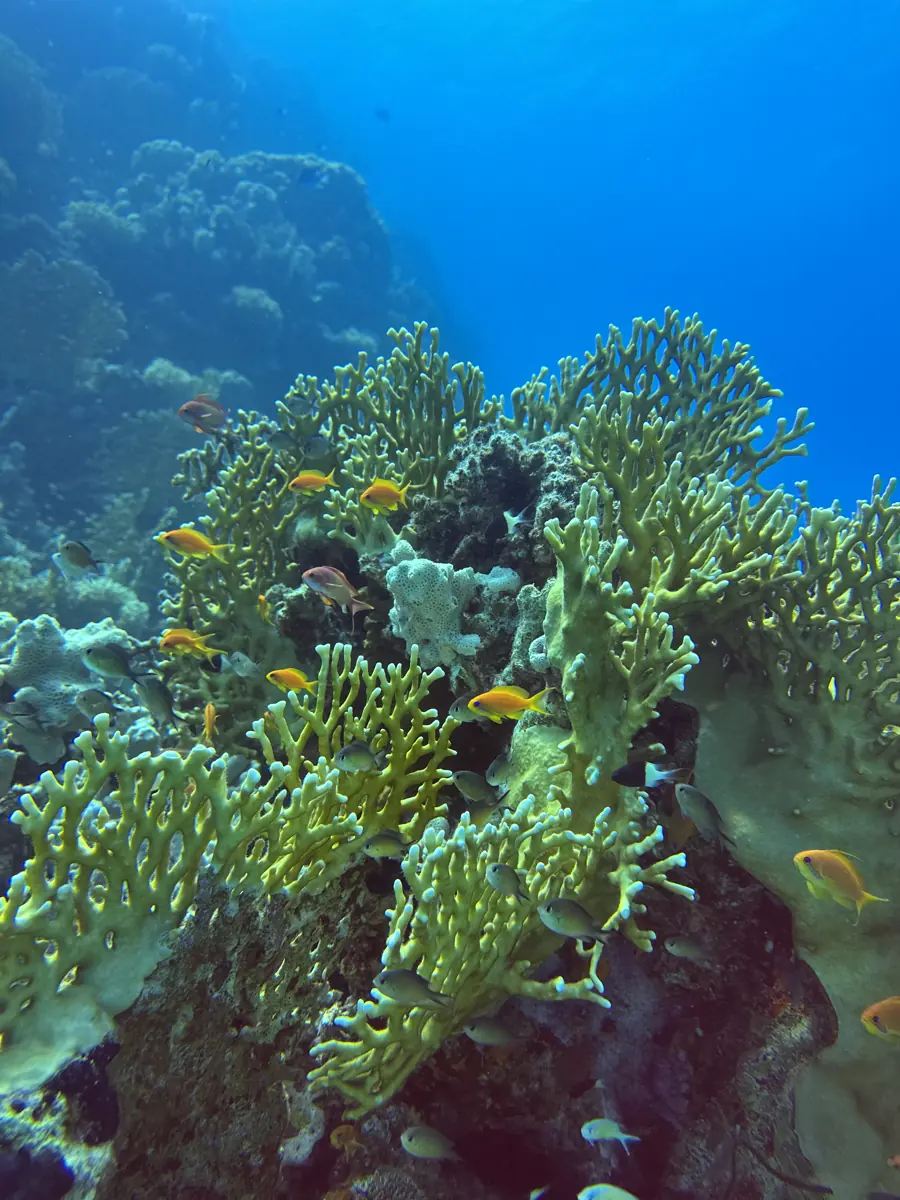
- Tag the species
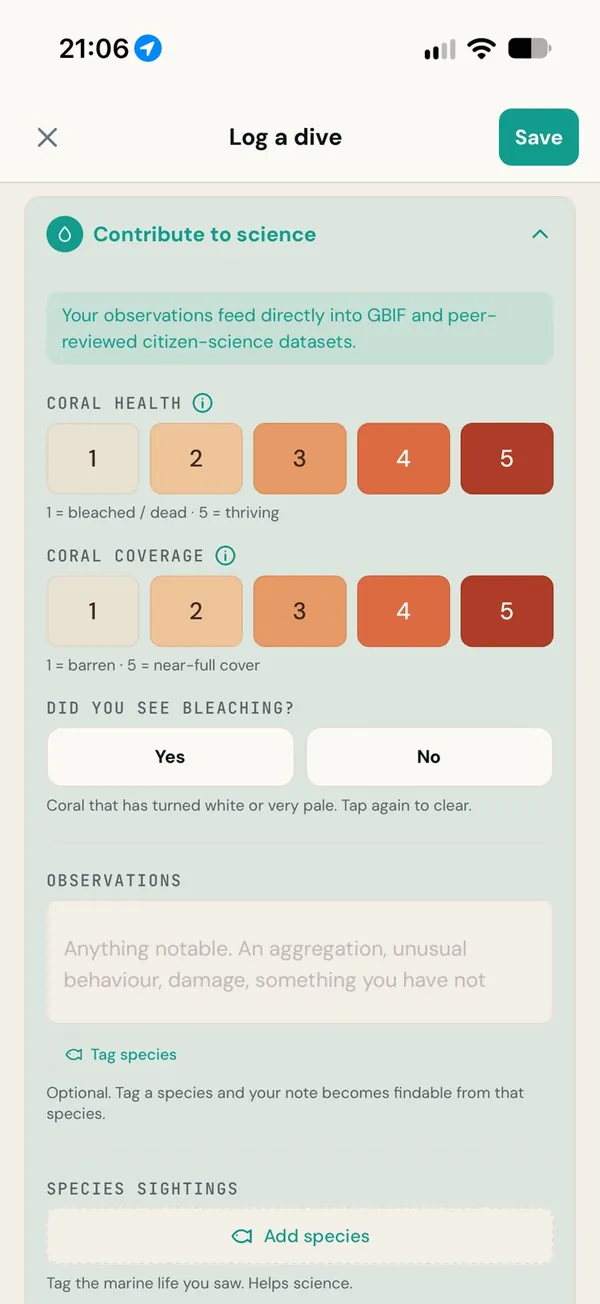
- Rate the coral, 1 to 5
- Bleaching? Yes or no
2
Add what you saw
Species from the local checklist, the state of the coral, and whether there was bleaching.
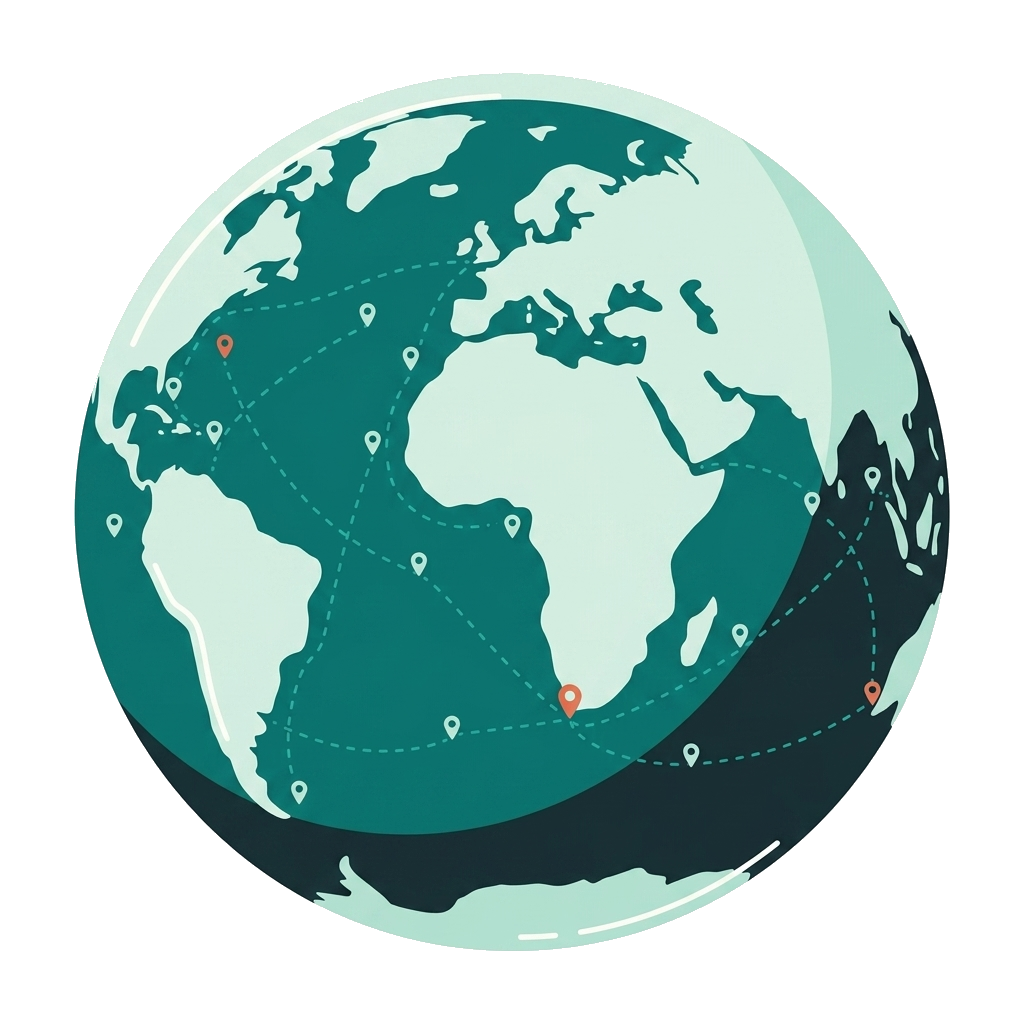
- Your diveDIVRDarwin Core archiveanonymous IDOBIS · GBIFopenEMODnet BiologyEU
3
It joins the open record
Only if you switch it on. Your name never leaves DIVR.
Who's working with the data
Named, with what they actually do.


For divers
- A logbook that's free, for good
- Species checklists for where you dive
- Your sightings counted by science, if you want

For centers, parks and researchers
- A live view of the reefs your divers visit
- Sightings verified by your own staff
- Open, citable data in Darwin Core

Your center's impact, on one dashboard.
Coming soon. We're building a free dashboard for dive centers: the dives logged at your center, the species your divers record, and how the reefs around your sites are doing, so you can show that impact to the divers choosing their next trip.
- Impact dashboard: dives, sightings and coral-health trends from your house reefs
- Public impact profile: show divers your center contributes to real research
- Founding input: pilot centers decide what we build first
Take it on the boat
Free on iPhone and Android, with the same logbook on the web.
Questions divers ask
Short answers about logging, your data and where it goes.
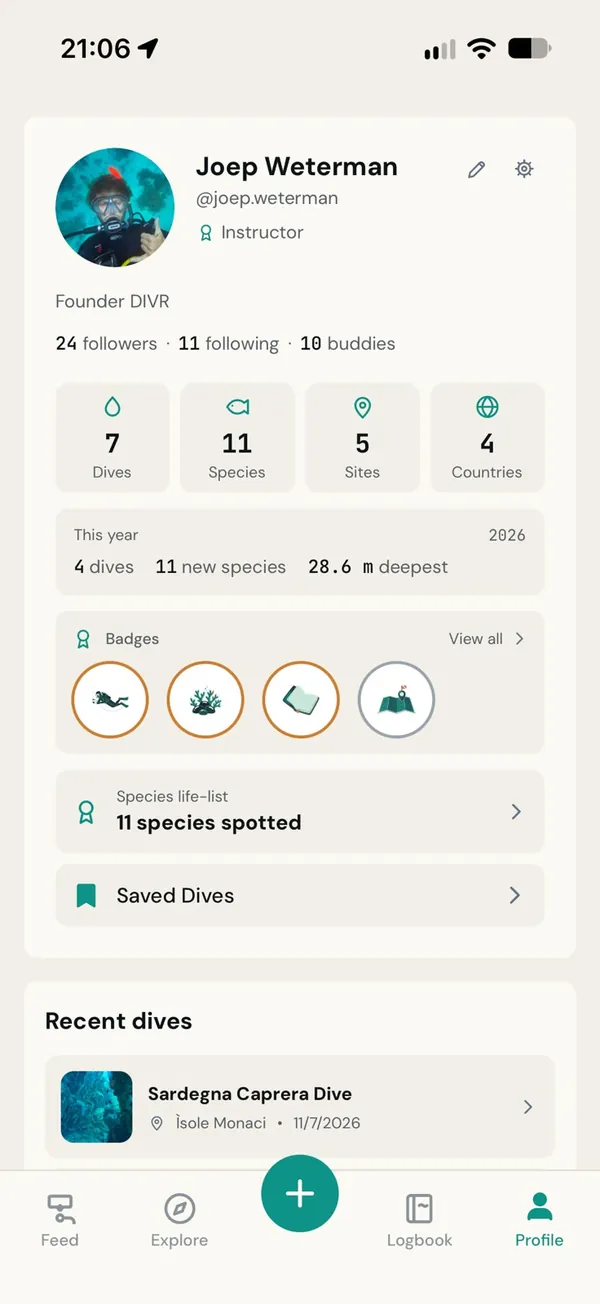
A free dive log for iPhone, Android and the web. You log your dives, the species you saw and the state of the coral. If you choose to, your sightings join the open biodiversity databases that marine parks and researchers use.
Yes. Logging dives, the species database and the dive site directory are free for divers, and there is no credit card at sign-up.
It is built around the record, not the feed. Every species is checked against the World Register of Marine Species, coral health uses one fixed 1 to 5 scale, and the data is kept in Darwin Core, the format scientists already use.
Site, depth and time take under a minute. Species and a coral rating are a few taps more. It works offline on the boat and syncs when you are back online.
Yes, as a file on the web: UDDF, Subsurface, Garmin FIT and DL7, up to 200 dives per file. Direct Bluetooth sync is not available.
Depth, time, site, water temperature, visibility, gas and tank pressure, photos and videos, the species you saw, coral health and coverage, whether you saw bleaching, notes and the buddies you dived with.
Yes. Tag a buddy on your dive and they can add it to their own log with one tap. You can also follow other divers.
Your log stays yours. If you switch on Contribute to Marine Science, the species from your public dives go to OBIS, GBIF and EMODnet under an anonymous research ID. It is off until you turn it on, and records that reach those databases are public and permanent.
Yes. Thousands of dive sites around the world are on the map, each with the species divers can expect there, reviews, and the dives logged at that site.
Marine parks already run pilots with DIVR, including Nature Foundation Sint Maarten and St Eustatius National Parks. A free dashboard for dive centers is coming; you can join the waitlist on this page.